
Filling or Root Canal: How Dentists Decide Which One You Need
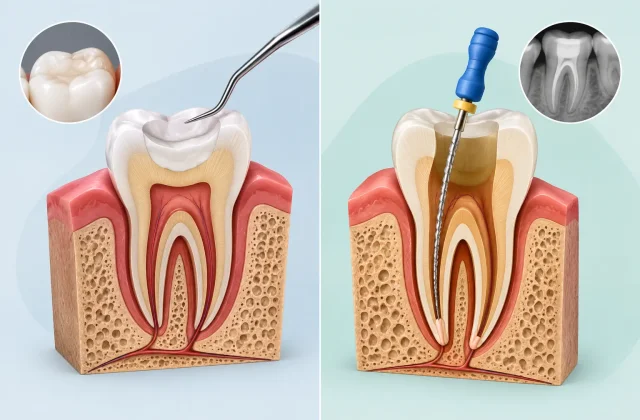
The decision between fillings or root canal comes down to one question: has the decay or damage reached…
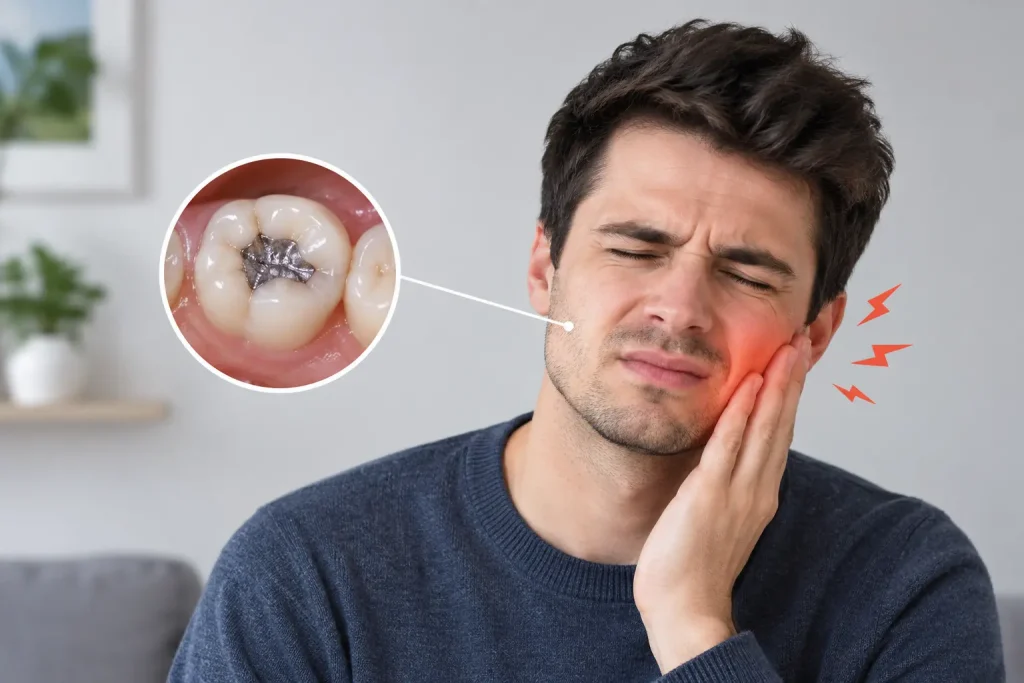
Some sensitivity after a filling is completely normal, usually a mild reaction to hot or cold that settles within one to two weeks as your tooth adjusts. But if your tooth pain after filling turns into sharp, throbbing discomfort, or pain that’s getting worse rather than better, it isn’t something to just wait out, it usually means something needs adjusting or checking properly.
If you’re in Acton, or nearby in North Acton or West London, and you’re a few days past treatment wondering whether your tooth pain after filling is actually normal, here’s how to tell the difference, and what to do about it either way.
A bit of toothache after filling is expected, and there’s a genuine reason for it. The drilling process, even when done carefully, irritates the pulp, the nerve tissue inside your tooth, and it takes time to settle back down. As the tooth adjusts to the new material sitting inside it, mild sensitivity is a normal part of that healing process, not a sign anything’s gone wrong.
| Sign | Normal | Needs a Check-Up |
|---|---|---|
| Sensitivity to hot/cold | Brief, fades within seconds | Lingers for a minute or more |
| Pain when biting down | Mild, settles within days | Sharp, persistent |
| Timeline | Improves over 1 to 2 weeks | Still there after 4 weeks |
| Type of pain | Triggered by temperature | Spontaneous, comes on its own |
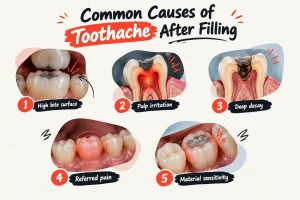
Not every ache means the same thing. Understanding the cause helps you know whether to wait it out or call the dentist. Here are the most common reasons behind tooth pain after filling:
This is one of the most common, and most fixable, reasons for tooth pain after filling. If it mainly hurts when you bite down, rather than a constant ache, the filling is likely sitting slightly too high, meaning your teeth meet unevenly when you close your mouth. It’s a five-minute adjustment at most, simply filing the surface down until your bite feels even again, and it fixes the problem completely.
A temporary filling that’s come loose needs the area kept clean, avoid chewing directly on that side, cover any exposed area with dental wax or sugar-free gum if it feels sharp, and call your dentist as soon as you can.
An older filling failing is usually down to one of three things:
Whatever the cause, this needs replacing within days, not weeks, since the exposed tooth underneath is vulnerable without protection. If the filling has come out entirely, keep the area clean, avoid chewing on that side, and get it looked at promptly. A lost filling, get it replaced the same day service means you’re not stuck waiting days with an exposed tooth in the meantime.
Sometimes decay had already reached closer to the nerve than expected before the filling went in, and despite the filling itself being done correctly, the tooth may not settle. In these cases, a root canal can become necessary, and it’s worth being clear that this isn’t a failure on anyone’s part.
It’s simply how the disease sometimes progresses once decay has gone deep enough. Warning signs that the pain has moved beyond a straightforward filling issue include:
If this is what you’re facing, a root canal to save the tooth resolves the pain properly rather than masking it.
While you’re waiting to be seen, a few simple steps can keep discomfort manageable without making the situation worse:
These are holding measures, not fixes. If pain is worsening or lasting beyond two weeks, book an assessment.
Whether you’re closer to Ealing, Hanwell, or right in Acton itself, walk-ins are welcome alongside booked appointments, and a lost or painful filling is assessed and treated the same day rather than joining a routine waiting list.
Emergency filling replacement in Acton means the gap between losing a filling and getting it fixed is hours, not weeks.
Yes, mild sensitivity to hot or cold is normal for one to two weeks as the nerve settles. Sharp or worsening pain beyond that point needs checking.
This usually means the filling is sitting slightly too high, causing an uneven bite. It's a quick adjustment that resolves the pain completely.
Normal sensitivity typically eases within one to two weeks. Pain lasting longer than four weeks, or getting worse, needs a proper assessment.
Keep the area clean, avoid chewing on that side, and get it seen as soon as possible, ideally the same day, to protect the exposed tooth from further damage.
Sometimes, yes. If pain is spontaneous, throbbing, or wakes you at night, the nerve may be too damaged for a simple filling and a root canal may be the proper fix.
A bit of sensitivity after a filling is completely normal and usually settles within two weeks, but tooth pain after filling that is sharp, worsening, or spontaneous isn’t something to just wait out. Whether it’s a high bite needing a quick adjustment, a temporary filling that’s come loose, or a lost filling needing same-day replacement, whether you’re in Acton, North Acton, or Chiswick, call 07759 998 555 for an emergency appointment and get it sorted properly.
The decision between fillings or root canal comes down to one question: has the decay or damage reached…
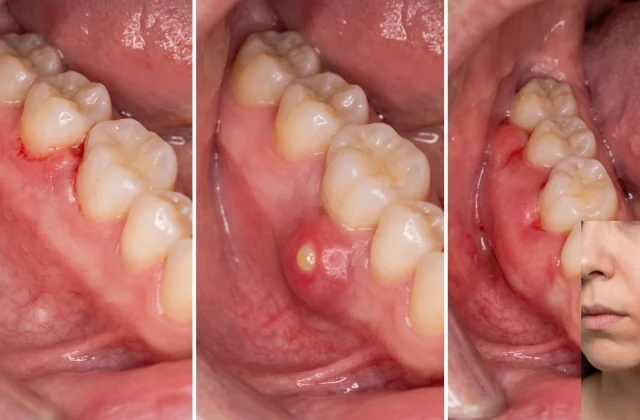
The stages of a gum abscess move in a fairly predictable order, from mild gum inflammation and tenderness,…

A swollen face from a tooth abscess becomes a genuine emergency when the swelling spreads toward your eye…
Don't wait for it to worsen. Book online or give us a call to secure a same-day appointment.