
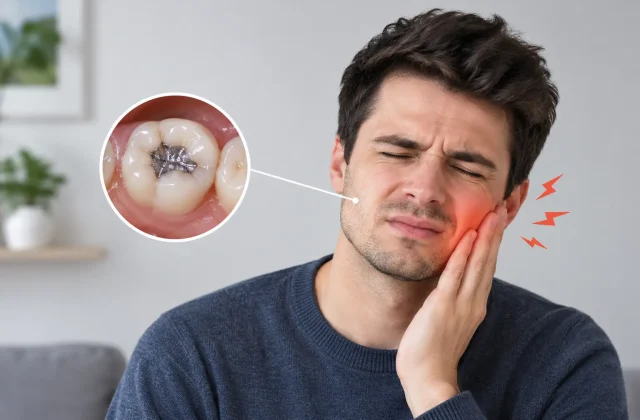
Tooth Pain After a Filling? When to See a Dentist in Acton
Some sensitivity after a filling is completely normal, usually a mild reaction to hot or cold that settles…
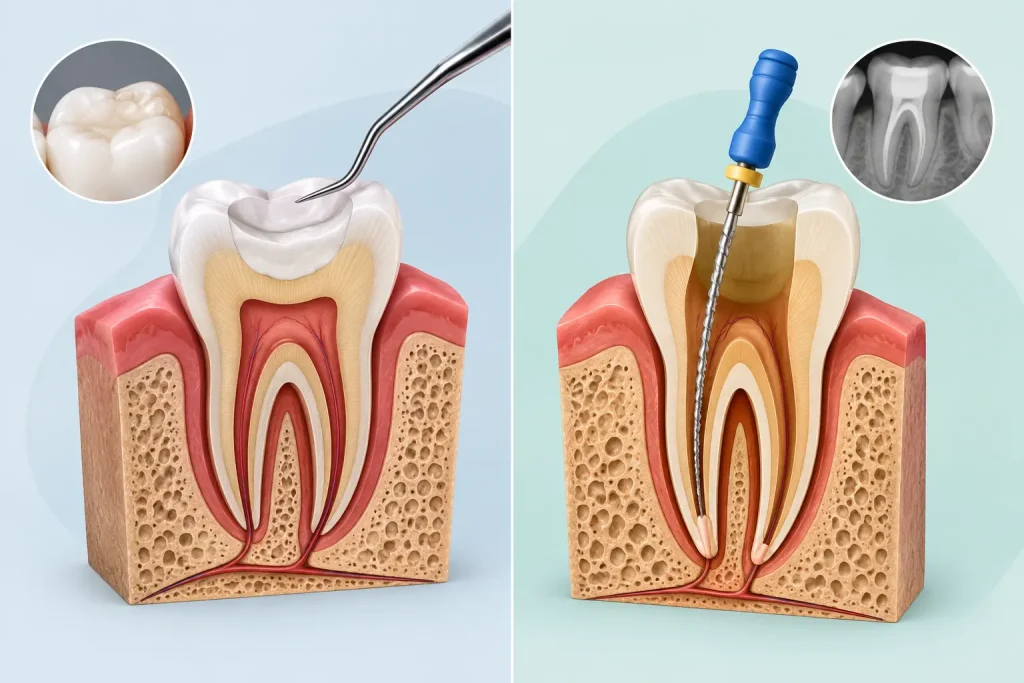
The decision between fillings or root canal comes down to one question: has the decay or damage reached the nerve inside the tooth? If it hasn’t, a filling is usually enough to restore the tooth. If the nerve is infected, inflamed, or exposed, a filling alone won’t solve the problem, and a root canal is needed to clear the infection and save the tooth.
If you’re in Acton, Park Royal, or elsewhere across West London and you’ve been told you might need one or the other, here’s exactly what dentists are actually checking for, and why the same-looking cavity can sometimes need two very different treatments.
Every tooth has a soft inner layer called the pulp, which contains the nerve and blood supply. Whether that pulp is still healthy is what decides the whole treatment path.
| Condition | Treatment |
|---|---|
| Decay hasn’t reached the pulp | Filling |
| Decay has reached or is very close to the pulp | Root canal, often with a crown afterward |
| Pulp is infected or inflamed (irreversible pulpitis) | Root canal |
| Pulp is already dead (necrotic) | Root canal |
| Tooth is cracked but the pulp is unaffected | Filling or bonding |
| Crack extends into the pulp | Root canal, or extraction if too damaged |
This isn’t guesswork. Dentists use a combination of tools to assess the pulp:
A tooth that reacts normally and settles quickly usually still has a healthy pulp. A tooth that lingers in pain, reacts poorly, or doesn’t respond at all often points toward the pulp being compromised.
If you’re weighing fillings or root canal and your tooth is behaving like any of the below, the nerve is likely involved:
Not every cavity or crack means the nerve is at risk. A filling restores the tooth fully when:
This is exactly why regular check-ups matter. Catching decay while a filling is still enough avoids the bigger procedure altogether.
Sometimes decay is genuinely borderline, and a filling is attempted first in good faith. If the pulp was already more affected than it appeared:
This isn’t a sign anything was done wrong. It simply means the tooth needs the next step of treatment, which is why a review appointment matters if pain returns after a filling.
Cost is a fair concern, and it often shapes how patients think about the two options:
0% finance is available on both treatments if cost is a concern.
Getting this right starts with a proper X-ray and assessment rather than guessing from symptoms alone. As an emergency dentist in Acton, every patient gets a clear explanation of which treatment is actually needed and why.
Where a root canal is the right call, same-day treatment to remove the infected nerve causing the pain is available, whether you’re coming from Ealing or Chiswick.
They combine an X-ray, showing how close decay sits to the nerve, with in-chair tests like tapping the tooth and checking its response to cold, to assess whether the pulp is still healthy.
Yes. If decay was closer to the nerve than it appeared, or the pulp becomes infected afterward, pain can return and a root canal may then be needed.
Not necessarily. Root canal treatment is done under local anaesthetic and is designed to relieve the pain caused by an infected nerve, rather than cause more.
If the nerve is genuinely infected, a filling alone won't resolve the underlying problem, and the infection is likely to continue or return.
A well-placed filling can last 10 to 15 years, while a root-canal-treated tooth, especially one protected by a crown, can last a lifetime with good oral hygiene.
Choosing between fillings or root canal comes down almost entirely to whether the nerve inside the tooth has been affected, checked through X-rays and simple in-chair tests rather than guesswork.
Whether you’re in Acton, North Acton, or elsewhere across West London, an early, accurate diagnosis is what keeps treatment as simple as possible.
Some sensitivity after a filling is completely normal, usually a mild reaction to hot or cold that settles…
Don't wait for it to worsen. Book online or give us a call to secure a same-day appointment.