

Tooth Pain After a Filling? When to See a Dentist in Acton
Some sensitivity after a filling is completely normal, usually a mild reaction to hot or cold that settles…
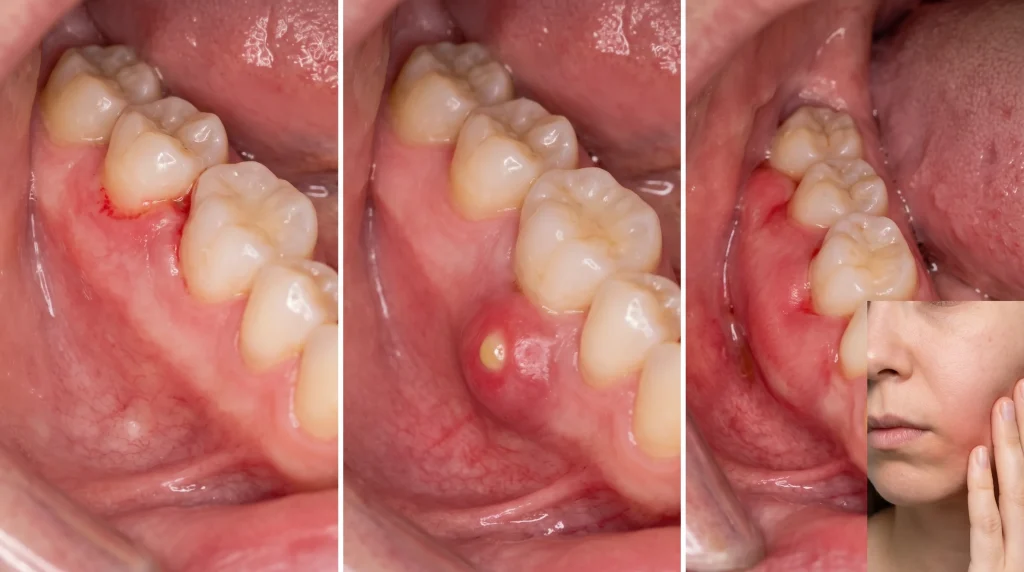
The stages of a gum abscess move in a fairly predictable order, from mild gum inflammation and tenderness, to a visible pus-filled swelling, to spreading infection that can affect the jaw, face, or bloodstream if left untreated. Knowing which stage you’re at is what decides how urgently it needs treating, and whether a straightforward in-chair fix is enough.
If you’re in Acton, Hanwell, or elsewhere across West London and you’ve noticed swelling that seems to be getting worse rather than better, here’s exactly how the stages of a gum abscess progress, what each one looks like, and when it stops being something you can manage at home.
A gum abscess doesn’t appear overnight. It builds up in a fairly predictable pattern as bacteria multiply around the tooth or within the gum pocket.
| Stage | What’s Happening | What It Feels Like |
|---|---|---|
| Stage 1: Early inflammation | Bacteria begin building up around the tooth or in the gum pocket | Mild tenderness, slight redness, gum feels sensitive to touch |
| Stage 2: Localised swelling | Pus starts collecting, forming a visible bump (parulis or gum boil) | Throbbing pain, visible swelling, possible bad taste |
| Stage 3: Spreading infection | Infection extends beyond the original site into surrounding tissue | Facial swelling, fever, difficulty opening the jaw or swallowing |
At this point, bacteria are only just establishing themselves around the tooth or gum pocket. There’s no visible swelling yet, just mild tenderness and sensitivity. This is the easiest stage to treat, often resolved with a professional clean before it progresses any further.
Once pus starts collecting, it forms a visible bump known as a parulis, or gum boil. The pain usually becomes throbbing rather than mild, and a bad taste in the mouth often develops as the abscess sits closer to the surface. This is the stage where home care stops being enough and professional drainage is usually required.
If the abscess isn’t treated at stage two, the infection can spread beyond its original site into the surrounding tissue, the jaw, or the face. Fever, facial swelling, and difficulty swallowing or opening the jaw are signs the infection has moved into this stage, and it needs urgent attention rather than a routine appointment.

Confirming which stage an abscess has reached relies on more than symptoms alone.
A dentist checks for visible swelling, tenderness to touch, and whether pus is already present at the surface. Tapping the tooth and checking its response to temperature also helps confirm whether the nerve itself is involved.
An X-ray shows how far the infection has spread beneath the surface, including whether it’s reached the bone, which isn’t always obvious from a visual exam alone. This is often how a dentist decides between simple drainage and a more involved root canal.
Not every gum abscess starts in the same place. The two types follow a similar staged progression, but they’re treated slightly differently, which is exactly what your dentist checks for first.
| Type | Where It Starts | Usual Cause |
|---|---|---|
| Periapical abscess | At the root tip, inside the tooth | Decay or trauma that’s reached the nerve |
| Periodontal abscess | In the gum pocket beside the tooth | Gum disease, rather than the tooth’s nerve |
A few symptoms specifically suggest the infection has moved beyond the early, manageable stage:
Any of these point toward the infection progressing beyond stage one, and waiting any longer genuinely increases the risk of complications.
Early inflammation can sometimes be managed with a professional clean and improved oral hygiene if caught soon enough, before any pus has had the chance to form.
Once a visible swelling has formed, incision and drainage is usually needed to release the built-up pus, often alongside a root canal if the tooth itself can be saved.
Where infection has already spread, antibiotics may be prescribed alongside drainage, and in more advanced cases, extraction becomes necessary if the tooth is beyond saving.
Whichever stage you’re at, booking a same day dental appointment is the safest way to get an accurate diagnosis rather than guessing which stage you’re dealing with from symptoms alone.
Stage one rarely needs anything beyond a clean and better home care. Once pus has formed, treatment becomes more involved, and the longer it’s left, the greater the risk of the infection spreading further.
Catching this early makes a genuine difference to how simple treatment stays. As an emergency dentist in Acton, same-day assessments mean you’re not left wondering which stage you’re at.
If drainage and treatment are needed, emergency abscess treatment in Acton is available the same day, and where the tooth can be saved, root canal to clear the infection and save the tooth is carried out rather than moving straight to extraction, whether you’re coming from Chiswick or Ealing.
A gum abscess moves through three stages: early inflammation, localised swelling with visible pus, and spreading infection that affects surrounding tissue if left untreated.
This varies from person to person, but it can progress from mild tenderness to a visible swelling within just a few days if left untreated.
It may drain temporarily and feel like it's improving, but the underlying infection almost always remains and tends to return, often at a more advanced stage.
A periapical abscess starts at the tooth's root tip, usually from decay reaching the nerve. A periodontal abscess starts in the gum pocket beside the tooth, usually linked to gum disease.
If swelling is spreading toward your eye or neck, you have a fever, or you're struggling to swallow or breathe, this needs immediate attention rather than a routine appointment.
They're closely related but not identical. A tooth abscess usually originates inside the tooth at the root, while a gum abscess can also originate in the gum tissue itself.
Stress doesn't directly cause an abscess, but it can weaken the immune system and worsen oral hygiene habits, both of which make an existing infection more likely to progress.
The stages of a gum abscess move from mild inflammation, to visible swelling, to potentially spreading infection, and catching it early is what keeps treatment straightforward.
Whether you’re in Acton, Park Royal, or elsewhere across West London, getting it assessed as soon as you notice swelling is the best way to stop it progressing any further.
Some sensitivity after a filling is completely normal, usually a mild reaction to hot or cold that settles…

A swollen face from a tooth abscess becomes a genuine emergency when the swelling spreads toward your eye…

Yes, toothache can genuinely cause headaches and earaches, mainly because the nerves in your teeth, jaw, and face…
Don't wait for it to worsen. Book online or give us a call to secure a same-day appointment.